
Why Carpets in Dubai Wear Out Faster Than They Should
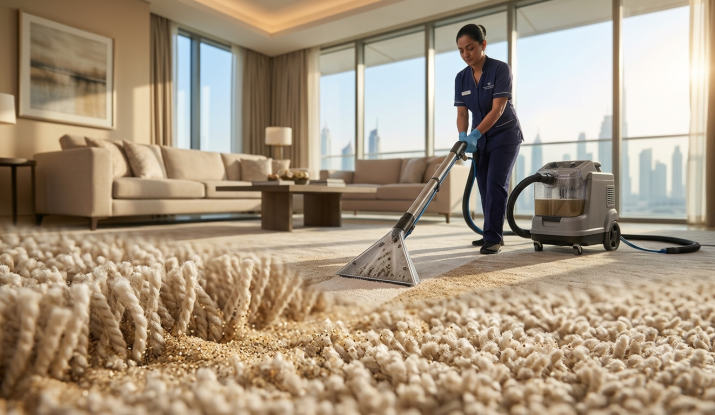
A carpet that has lost its colour depth and feels rough underfoot is usually not worn out. It is loaded. Fine sand travels indoors on shoes, works down between the fibres and settles against the backing, where every footstep grinds it against the yarn. That is abrasion, and it is the reason carpet clean services matter more in this climate than in most others.
What vacuuming reaches and what it does not
Domestic vacuuming lifts the surface layer and slows the rate at which grit accumulates. What it cannot do is pull material out from against the backing, which is where the abrasive load sits. A carpet can be vacuumed twice a week and still hold a significant weight of sand and soil, and the first sign is texture rather than appearance. The pile stops springing back.
Odour is a separate problem
Spills, pet accidents and general humidity leave organic residue in the backing and underlay. Surface deodorising masks it for a few days and it returns, because the source was never removed. If a carpet smells again a week after treatment, the treatment did not reach the source. In rooms where both carpet and upholstery hold odour, link naturally to the sofa cleaning guide.
The assessment comes first
Fibre type determines the method. Wool, silk blends, synthetic broadloom, loose rugs with natural backings and machine made rugs all behave differently with water, heat and pH. Wool in particular reacts badly to high alkaline solutions and can felt or lose colour. Stains are also assessed individually, because a protein stain, a dye stain and an oil based stain need three different pre treatments.
How the treatment works
High suction dry vacuuming removes the grit first, and this step does more for the eventual result than anything that follows. A pre treatment is applied to the soiled and stained areas and given time to work. The pile is agitated to release the bound soiling from the fibre. Hot water extraction then injects the solution and immediately recovers it along with the suspended soil, so nothing is left behind to attract new dirt. Drying is accelerated with air movement.
Why drying speed matters here
A carpet left damp in Dubai humidity is a problem rather than an inconvenience. Slow drying is what produces musty odour and, in the worst cases, mould in the underlay. Proper equipment recovers most of the moisture during extraction, and air movers handle the rest. Rooms are usually usable again within a few hours.
How often
Every six to twelve months for most homes, and more often in high traffic areas, homes with pets, or ground floor properties with direct outdoor access. Commercial spaces with public footfall need a shorter cycle. Between treatments, the single most effective thing you can do is put a proper barrier mat at every external door, because most of the sand in a carpet arrived on a shoe. For larger homes, the same maintenance cycle often forms part of a wider villa deep cleaning plan.
Frequently asked questions
Will cleaning shrink my carpet?
Not with hot water extraction correctly applied. Shrinkage risk comes from over wetting natural fibre carpets and rugs, which is why the fibre assessment happens before any water is used.
Can you clean rugs in place?
Most, yes. Some natural fibre and hand knotted rugs are better treated off site where drying can be controlled, and that should be recommended at the assessment rather than attempted in the living room.
How long until I can walk on it?
Usually a few hours with proper extraction and air movement. Full drying to the backing takes longer, so heavy furniture should stay off until the following day.
Seeing it on your own floor
Our carpet cleaning page sets out the assessment and extraction process, and our teams will treat a section first on request so you can see the difference on your own carpet before committing to the full area. For regular upkeep between specialist treatments, readers can also move into the broader residential cleaning service.